Visual production at major events is no longer limited to screens positioned behind the stage. Tomorrowland’s indoor Shanghai event, “The Magic of Tomorrowland,” is set to become one of the most striking examples of this shift. The event will take place at Hero Dome in Shanghai on October 17-18. Following the first edition held last year, the event has been expanded to two days this year, while the venue itself has also undergone a major transformation.
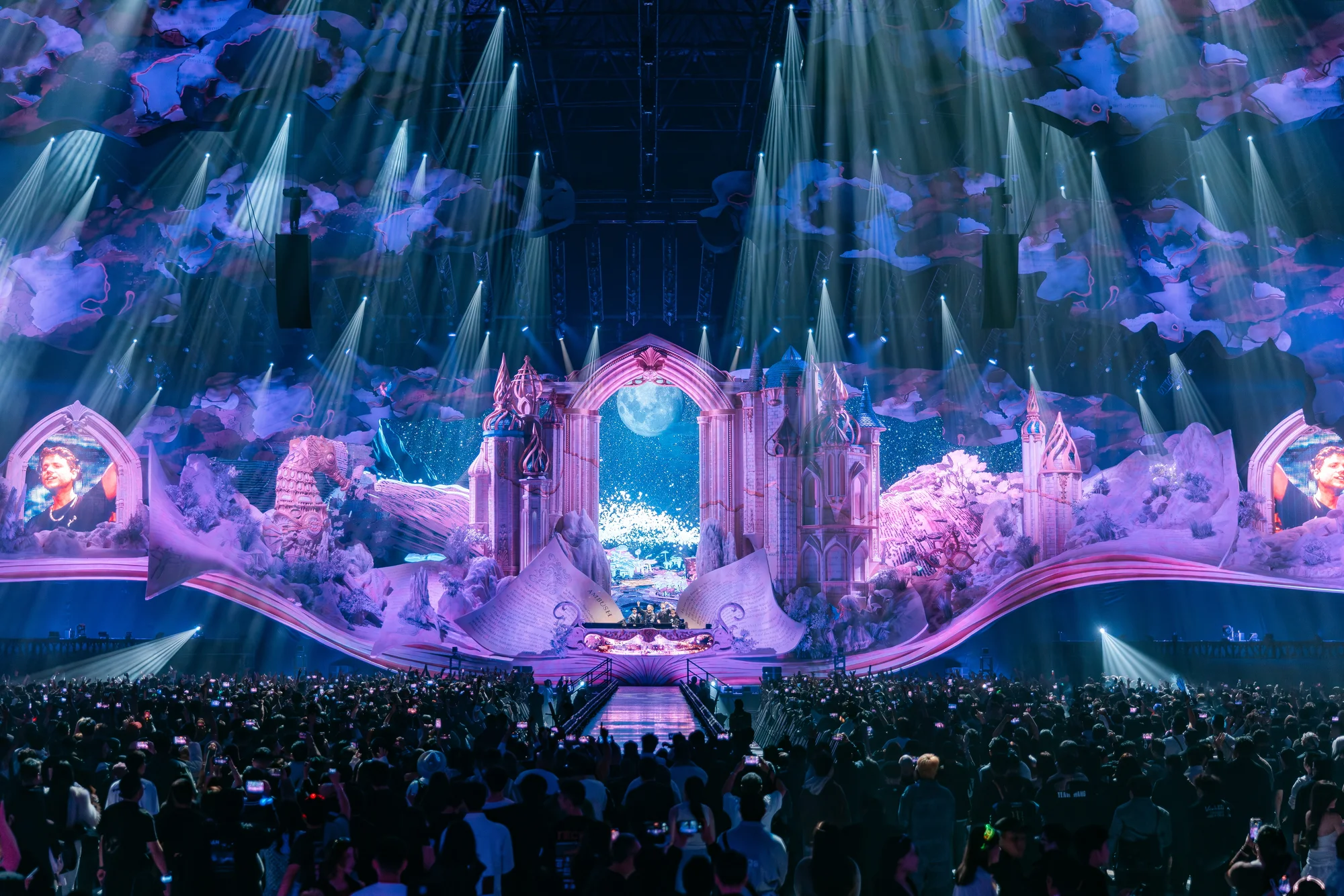
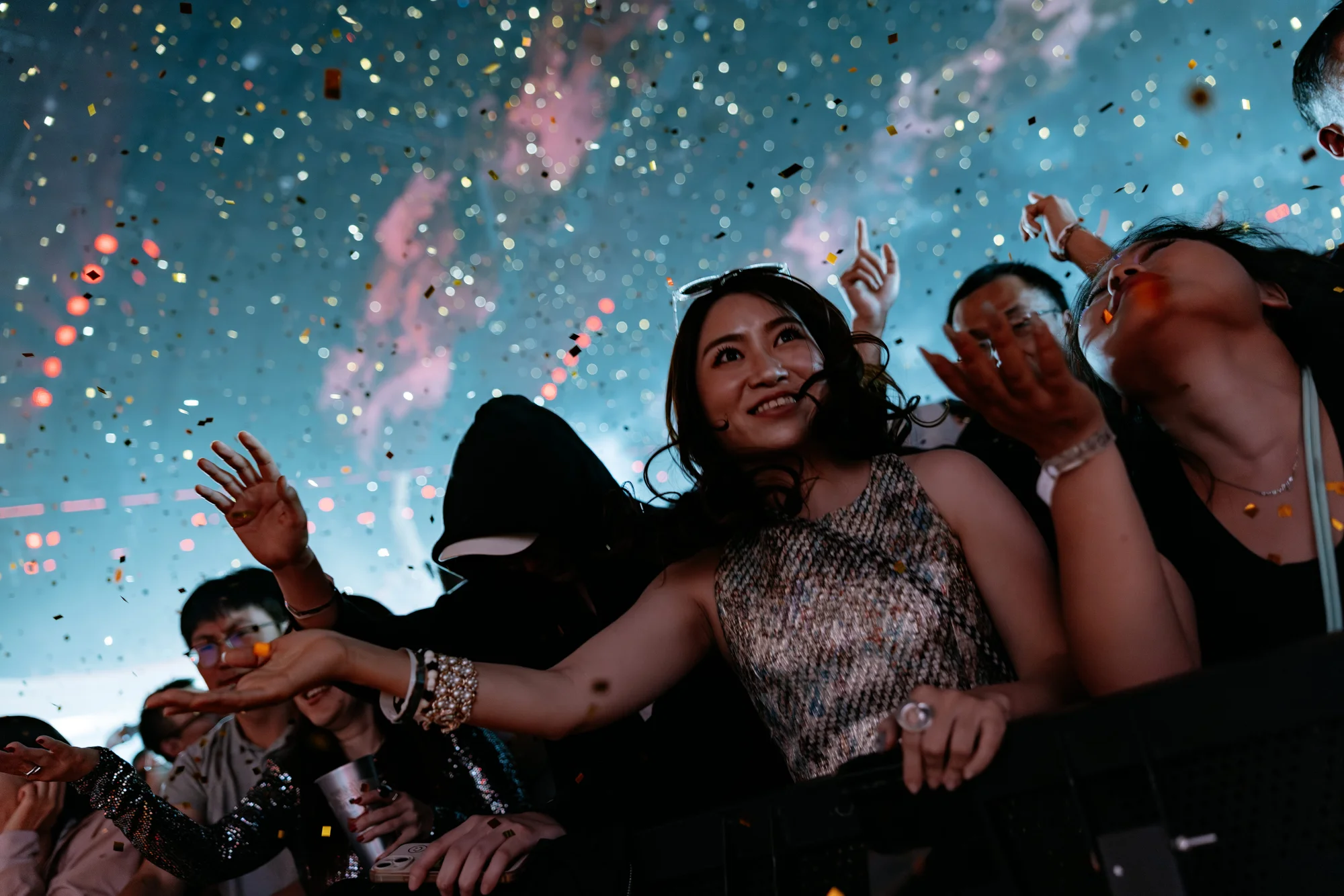
At the center of Hero Dome is a 99-meter-long curved LED screen. The main display is complemented by 80 screens installed across the ceiling. As a result, visuals extend not only across the front of the stage, but also above and around the audience, creating a 360-degree visual environment.
The Stage Is No Longer Only at the Front
In traditional concert and festival design, audience attention is largely directed toward a single main stage. The system inside Hero Dome expands that boundary. By combining the curved main screen with the ceiling-mounted displays, the entire venue becomes part of the production. This year’s event is built around Tomorrowland’s “Planaxis” theme. Inspired by an underwater world, the concept will spread across Hero Dome through moving visuals, lighting, sound, and stage design. Giant shells, marine creatures, coral-like structures, and other underwater-inspired visual elements will also form part of the event design.
As a result, participants are no longer simply an audience watching a performance on stage, while the physical venue itself becomes part of the narrative.
Two Different Programs Across Two Days
Tomorrowland’s Shanghai event will be held over two days for the first time this year, with a different artist lineup each day. The first day will feature international and local artists including Axwell and Lost Frequencies. The second-day program includes Tiësto, Alison Wonderland, ARTBAT, R3HAB, Joel Corry, and Miss Monique.
The move to a two-day format does more than extend the duration of the event. With different artist lineups and changing atmospheres, the same physical venue is expected to create different event experiences across the two days.
The Physical Venue Becomes Part of the Experience
The transformation of Hero Dome reflects a broader shift in the use of event technologies. Large LED screens have long been central elements of concerts and festivals, but new applications are moving visuals beyond a single surface and spreading them throughout the entire venue. In this approach, the screen is no longer simply a tool for displaying content. Ceilings, walls, lighting systems, and physical decoration become parts of the same visual story.
In the case of Tomorrowland Shanghai, the purpose of the technology is not simply to create a larger image, but to transform the environment in which participants spend the event. Production therefore shifts from a one-way show moving from the stage toward the audience into an experience that surrounds participants.
Competition among major events is no longer driven only by artist lineups or attendance figures. How a venue is used, the extent to which visual technologies are integrated into the experience, and how participants interact with the content are also becoming important elements of event design.