

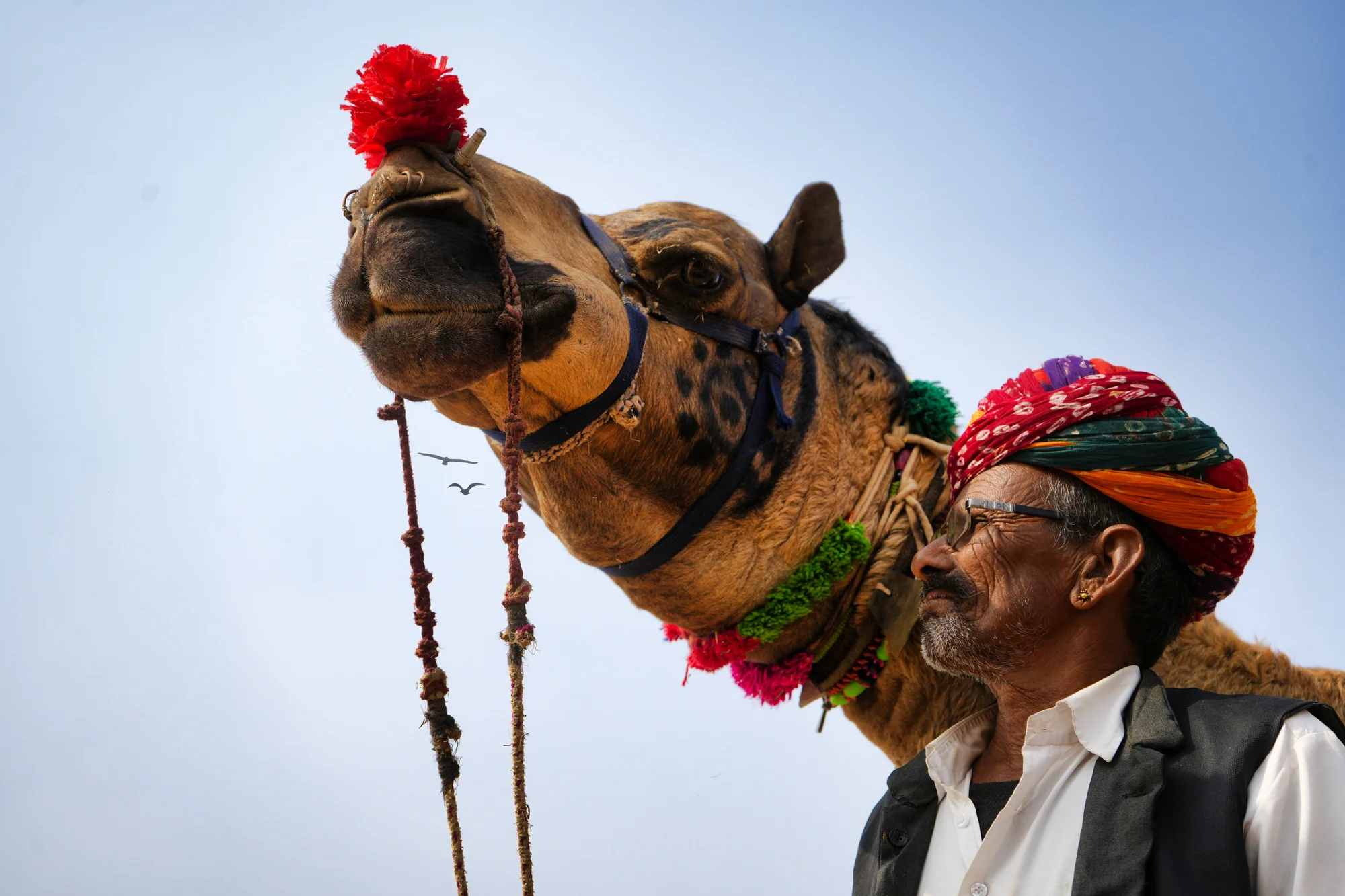
India’s Pushkar Camel Fair is preparing to return this month, once again transforming a small desert town in Rajasthan into one of the country’s most distinctive tourism spectacles. Taking place from November 17 to 24, the annual fair combines camel and livestock trading with religious rituals, folk culture, competitions and visitor experiences that have made it one of India’s most recognisable destination events.
The fair is rooted in a traditional livestock market, but its appeal now goes far beyond commerce. Decorated camels, moustache competitions, puppet shows, folk performances, camel sports and the famous Matka Tod contest all form part of the experience. At the same time, pilgrims continue to visit Pushkar during the sacred Kartik period, linking the event to one of the most important religious moments in the town’s calendar. That dual identity is what makes Pushkar particularly interesting from a tourism perspective. It is not simply a festival created for visitors, nor is it only a traditional fair that happens to attract tourists. It operates as both at the same time.
A Livestock Fair Became A Global Visitor Attraction
Pushkar Fair, also known as Pushkar Mela, has long been associated with camel and livestock trading. Rajasthan’s desert culture has a deep connection with camels, and the fair became one of the best-known places where traders, breeders and buyers gathered each year. Over time, however, the event developed into something much broader.
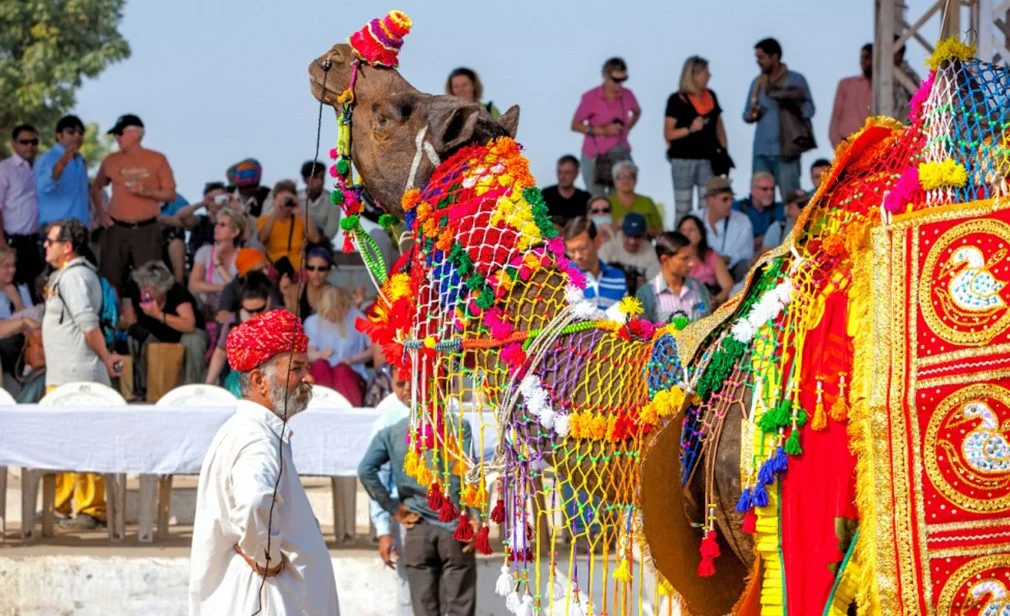
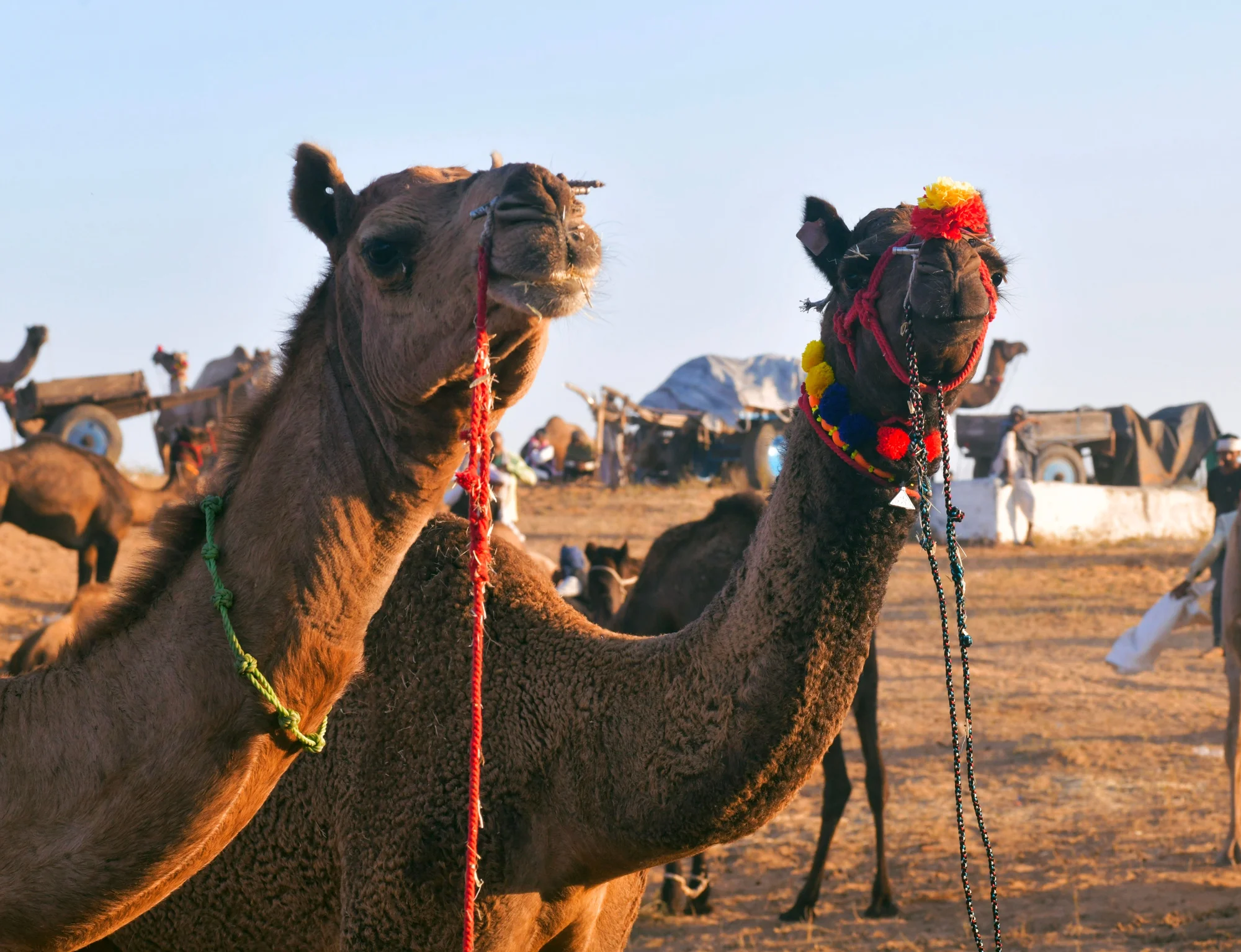
Tourism authorities now position it not only as a livestock fair, but as one of Rajasthan’s major cultural attractions. Visitors come to see camels dressed in colourful fabrics and ornaments, to watch cultural contests, to experience desert traditions and to explore the wider atmosphere of Pushkar during the fair period. This shift reflects a pattern seen in many heritage-led events. The original economic or ritual purpose remains, but the event grows into a tourism product by adding performances, activities and highly visual experiences that can attract audiences far beyond the local community. Pushkar has done this without losing the symbols that made it distinctive in the first place. Camels remain at the centre of the story.
Decorated Camels, Moustache Contests And Folk Culture
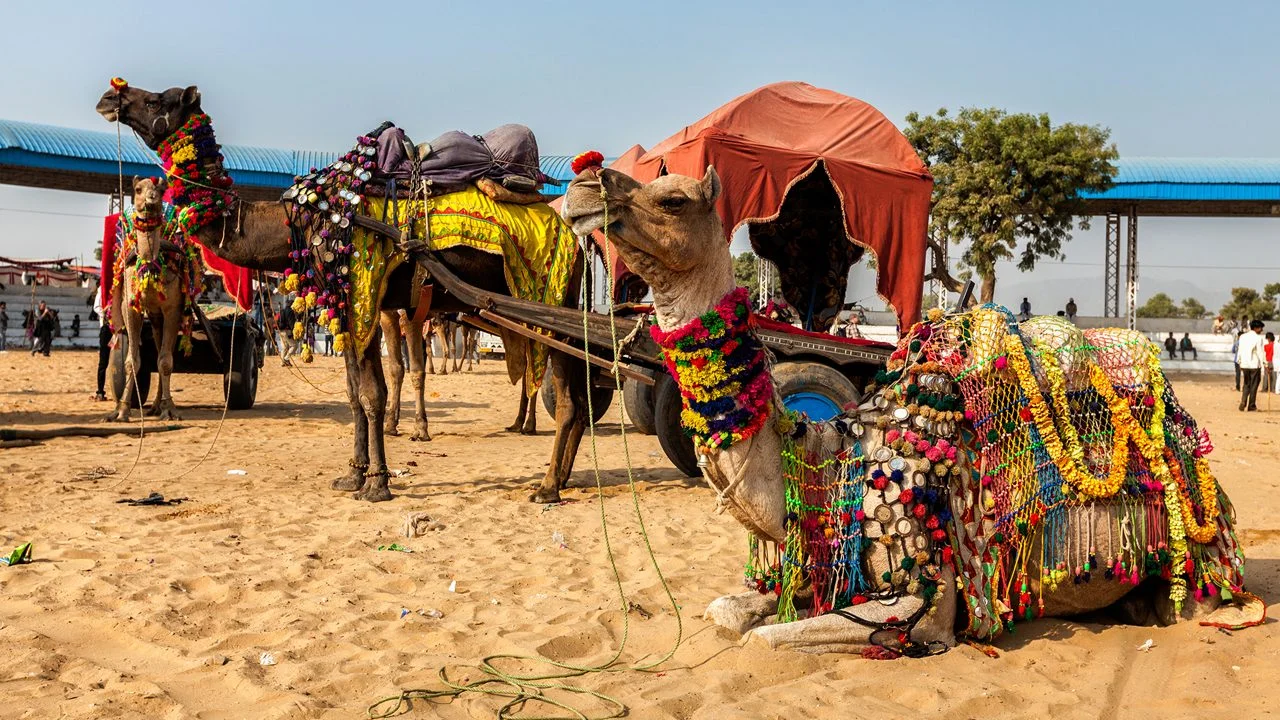
Part of Pushkar’s appeal comes from its range of unusual and highly photogenic activities. Camels are not simply brought to market. They are decorated, displayed and woven into the performance culture of the fair. Camel sports and presentations help turn the animals into part of the event experience rather than only part of the trade. Around them, the programme expands into a wider festival.
Competitions such as the longest moustache contest and Matka Tod have become some of the fair’s best-known attractions. Puppet shows, folk performances and local cultural activities add another layer that appeals strongly to domestic and international tourists. This matters because the visual identity of the event is unusually strong. Many fairs depend on one central stage or a programme that can feel interchangeable from one destination to another. Pushkar is different. Its imagery is immediately recognisable: camels in desert surroundings, Rajasthani dress, traditional performance and a town filled with pilgrims, traders and visitors. That gives the destination a cultural product that is difficult to copy elsewhere.
Religion Gives The Fair A Deeper Meaning
Pushkar’s importance also comes from its religious identity. The fair is closely associated with the period of Kartik Purnima, when pilgrims come to Pushkar to visit the sacred lake and temples. This gives the event a spiritual dimension that sets it apart from many other tourism festivals. The presence of pilgrims changes the atmosphere of the town. While tourists may arrive for the spectacle and photography, religious visitors bring another rhythm to the destination through ritual bathing, temple visits and devotional activity.
This overlap between tourism and pilgrimage is one of the most important features of the fair. It creates an event that feels layered rather than purely performative. The market, the competitions and the cultural programming are highly visible, but they exist alongside a longstanding religious tradition that gives the fair deeper historical meaning. For destination branding, this is valuable. It means Pushkar is not selling only entertainment. It is presenting a cultural landscape shaped by faith, trade and desert life.