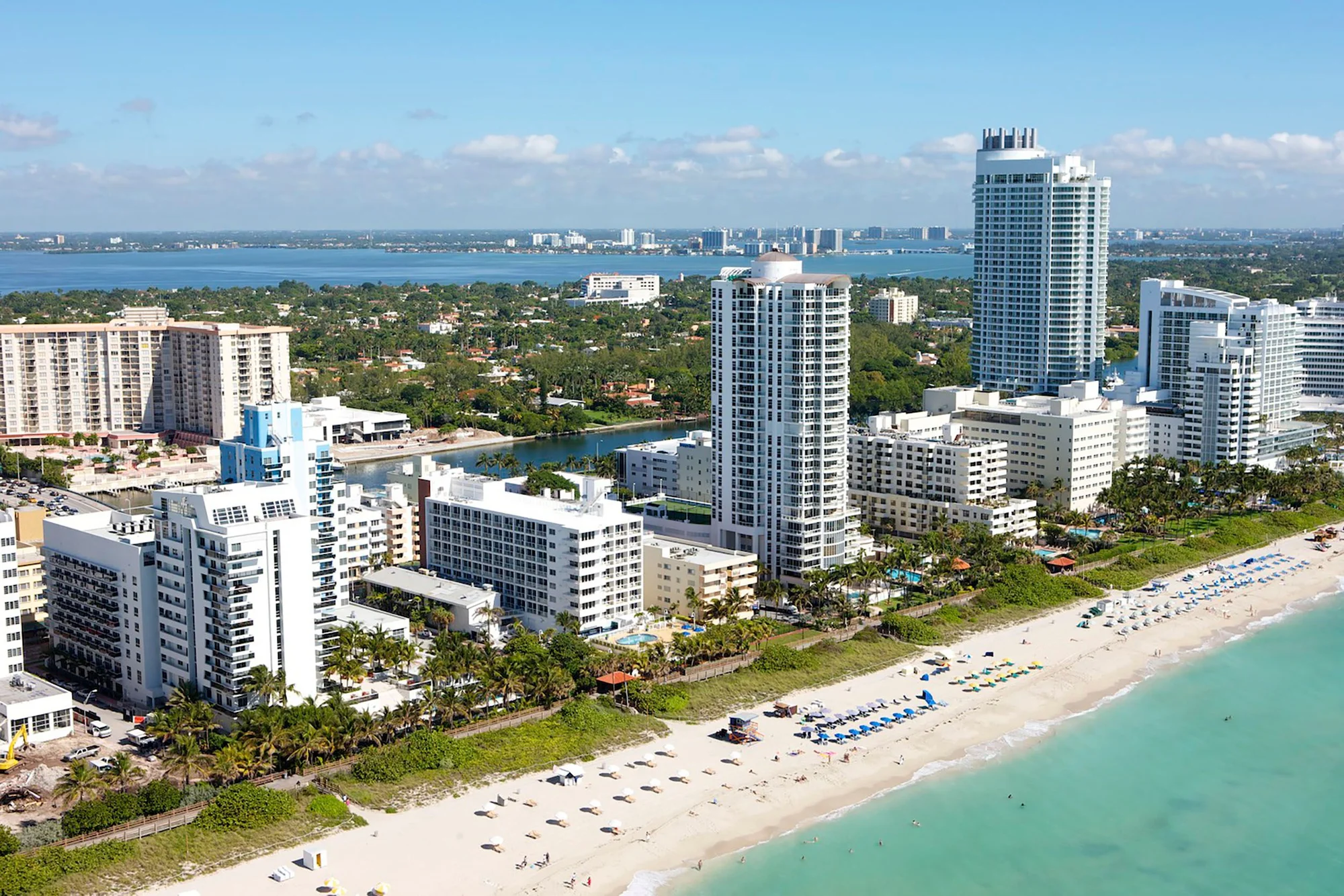
Hotel capacity, flight connectivity, venue options, and pricing have long been among the key factors in winning congresses and corporate events. Florida is adding another element to that competition: financial risk linked to weather conditions. VISIT FLORIDA’s event insurance program provides protection against potential financial losses if eligible meetings and events in the state are cancelled or disrupted by hurricanes. With the destination covering the insurance premium, organizers bringing an event to Florida do not have to carry the full weather-related risk on their own.
The program focuses specifically on the Atlantic hurricane season from June through November and covers eligible events taking place in 2026, 2027, and 2028. The level of coverage available is determined by the number of contracted room nights generated by the event. Events producing 100-300 contracted room nights can receive coverage of up to $100,000, rising to $150,000 for 301-500 room nights and up to $200,000 for events generating more than 500 room nights.
Hurricane Season Influences Event Decisions
Florida is one of the world’s major tourism and meetings destinations, but its geographic location also exposes it to hurricane season every year. This creates significant uncertainty, particularly for event organizers signing contracts months or years in advance. The cancellation of a major meeting does not only affect venue costs. Spending on hotels, transportation services, technical teams, food and beverage, décor, and other suppliers can also be put at risk.
When an event involves hundreds or thousands of participants, that financial exposure can grow quickly. Organizers are therefore looking not only at average weather conditions for the planned event dates, but also at potential cancellation or disruption scenarios when selecting destinations. At a time when companies are managing travel and event budgets more carefully, protection against unexpected costs is increasingly becoming part of the destination decision. Florida’s program is designed to reduce exactly this concern.
More Room Nights, Higher Coverage
The structure of the program directly links the size of an event to the level of protection provided. Eligible events generating at least 100 contracted room nights can participate. As the room-night volume increases, so does the maximum level of insurance coverage. Events generating between 100 and 300 room nights can receive up to $100,000 in coverage, while those generating 301-500 room nights can receive up to $150,000. For events producing more than 500 room nights, coverage can reach $200,000.
This structure also makes the program’s objective clear. The support is not aimed at individual travelers, but at meetings and event groups capable of generating meaningful accommodation demand in Florida. Insurance therefore becomes not only a risk-management tool, but also a sales incentive used by the destination to attract more group business.
Destinations Are No Longer Selling Venues Alone

Competition in the events market has increasingly expanded into a wider range of services. Convention bureaus and tourism organizations have long supported organizers with venue research, hotel connections, local transportation, supplier assistance, and destination promotion. Some destinations also provide financial incentives or marketing support for major congresses. Florida’s model adds direct risk management to that package.
From the organizer’s perspective, this can create a meaningful point of differentiation. During hurricane season, when choosing between destinations with similar pricing and infrastructure, a location offering free protection against possible cancellation risk can present a stronger value proposition. From the destination’s perspective, the cost of the insurance can be viewed as an investment in return for the hotel stays, restaurant spending, transportation use, and wider economic activity generated by the event.
Climate Risk Could Become a New MICE Competitiveness Factor
Florida’s example also points to a broader shift. Extreme weather events are no longer an issue affecting only coastal destinations. Heatwaves, wildfires, floods, heavy snowfall, and storms can disrupt event operations in different parts of the world. As a result, climate and weather-related risks could become more visible in future destination assessments.
When evaluating a destination’s convention center capacity or hotel pricing, organizers may increasingly examine emergency plans, alternative transportation options, cancellation policies, and insurance coverage as well. This could also change how destinations define competitiveness. A strong event destination may increasingly be seen not only as one that performs well when everything goes according to plan, but also as one that can reduce an organizer’s financial and operational exposure when unexpected disruption occurs.
Florida Turns Risk Into a Sales Advantage
Hurricanes are not a new challenge for Florida. What is new is the way the disadvantage is being addressed in destination marketing. Rather than ignoring weather risk, the program openly acknowledges it and provides organizers with a mechanism to reduce its financial impact. In doing so, one of the destination’s vulnerabilities becomes part of its sales proposition.
At a time when event costs are rising and companies are planning programs more carefully, this type of protection could become increasingly valuable. Florida’s model opens a new front in destination competition: winning a congress may no longer depend only on offering a strong venue, but also on sharing part of the risk carried by the organizer.