

Mandarin Oriental has launched a new travel series that turns cinematic destination content into a product guests can actually book. The six-part One Night In series follows a traveller through 24 hours in Bangkok, Abu Dhabi, Madrid, Milan, Paris and Marrakech. Each episode is filmed from a first-person perspective, with the hotel acting as a gateway to the destination rather than the main subject.
The format combines restaurants, local culture, private access, landmarks and encounters with people connected to each city. But the concept goes beyond branded content. Mandarin Oriental is also introducing One Night In stay experiences, allowing guests to book their own 24-hour itinerary inspired by the series. The idea will eventually extend across the group’s wider hotel portfolio, not only the six destinations featured on screen.
Bangkok Becomes the First Test
Bangkok is the first destination in the series, coinciding with the 150th anniversary of Mandarin Oriental, Bangkok. The episode takes viewers through experiences including Wat Arun, Thai boxing, Bangkok neighbourhoods and an encounter with street-food chef Jay Fai. It also includes behind-the-scenes access to the opening of Anne-Sophie Pic at Le Normandie.
Mandarin Oriental launched the film through three evenings of screenings, culinary experiences and live performances at the hotel between November 18 and 20. The corresponding Bangkok stay experience is already available for bookings and stays through March 31, 2027. Guests receive a One Night In Passport at check-in and can choose between experiences such as Thai boxing or alms giving.
The package also includes hotel credit for dining, bar and wellness experiences, while the evening programme continues through a themed turndown experience connected to the film. This turns the marketing campaign into something more tangible: viewers can move from watching a destination story to buying a version of it.
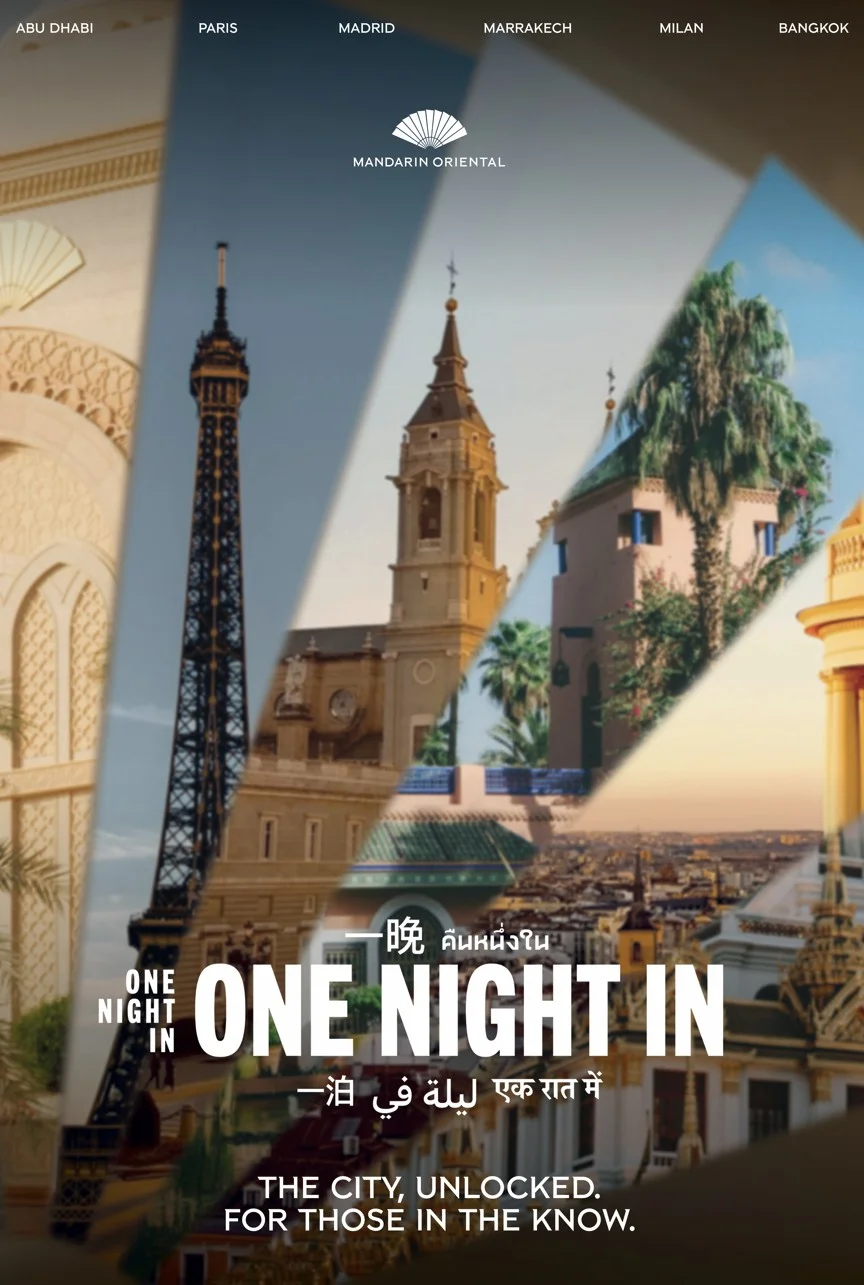
Six Cities Become Part of the Content Strategy
Bangkok will be followed by Paris, Madrid and Milan, with Marrakech and Abu Dhabi launching later. The remaining episodes are scheduled to begin rolling out from the second quarter of 2027. Rather than building each film around a traditional destination checklist, Mandarin Oriental says the series will focus on local people, culture, craftsmanship and experiences that are less visible to ordinary visitors.
Private access is part of the proposition. The series includes experiences ranging from major museums and restaurants to places and encounters that may not normally be available to the general public. For a luxury hotel group, that approach shifts the value proposition away from the room itself. The hotel becomes the organiser of access to the destination. That can be particularly important in luxury hospitality, where physical differences between high-end hotels are increasingly accompanied by competition around experiences, local knowledge and personalisation.

Hospitality Brands Are Becoming Media Brands
The campaign also reflects a broader change in hospitality marketing. Hotels have traditionally promoted destinations through photography, editorial content, social media and travel guides. Mandarin Oriental is moving further by producing episodic entertainment and then connecting that content to an actual stay.
The brand had already entered longer-form entertainment through Inside the Dream. One Night In pushes the model further by combining media, destination marketing and commercial booking in the same campaign. For hotels, this creates a different path to conversion. A potential guest may first encounter Bangkok, Madrid or Marrakech as entertainment rather than through a room offer. The booking opportunity comes later, once interest in the destination has already been created.
That model could also have relevance beyond leisure travel. Luxury groups, incentive programmes and private celebrations increasingly look for destination experiences that extend outside the hotel. Access to local culture, gastronomy and distinctive venues can become part of the programme itself. In that environment, a hotel’s ability to curate the destination becomes part of what organisers are buying. Mandarin Oriental’s new series effectively packages that idea into a media product first and a hospitality product second. The result is a campaign where destination storytelling does not end when the film does. It becomes something the guest can book.