

Ireland’s Dromoland Castle has entered the largest redevelopment in its 63 years as a luxury hotel, with an investment of approximately $60 million (€55 million). The transformation covers accommodation, public areas, dining, wellness and event spaces across the historic 500-acre estate in County Clare. The 16th-century castle is temporarily closed while the main phase of work takes place, although the estate’s golf facilities, leisure centre and private lodges remain open.
One of the biggest changes will be an expansion of accommodation from 96 to 121 rooms and suites. The project will also refurbish the Brian Ború Hall, the hotel’s main ballroom and event space, while adding two new meeting rooms for corporate and group events. For a property already positioned around weddings, celebrations and luxury gatherings, the redevelopment expands both the residential capacity and the spaces available to event organisers.
New Rooms Add Capacity for Multi-Day Events
The accommodation expansion includes two new collections designed to extend the guest experience beyond the main castle. The Walled Garden Collection will introduce 13 guestrooms inside converted former stables near the estate’s historic gardens. Each room will have its own entrance and patio area, creating a more private accommodation option within the wider property.
A further 16 guestrooms, including five suites, will be added through the new Heritage Collection. These rooms will occupy a newly constructed floor opposite the castle’s main entrance, with selected rooms offering private balconies overlooking the estate. The additional inventory could be particularly relevant for weddings and multi-day private events, where keeping larger groups within the same estate is an important part of the guest experience.
Dromoland already promotes the property for weddings, corporate events and private celebrations. Its current wedding enquiry page is taking registrations for a waitlist for 2028 weddings, showing how far in advance demand for the property can extend.
A New Atrium Will Become the Social Heart of the Castle
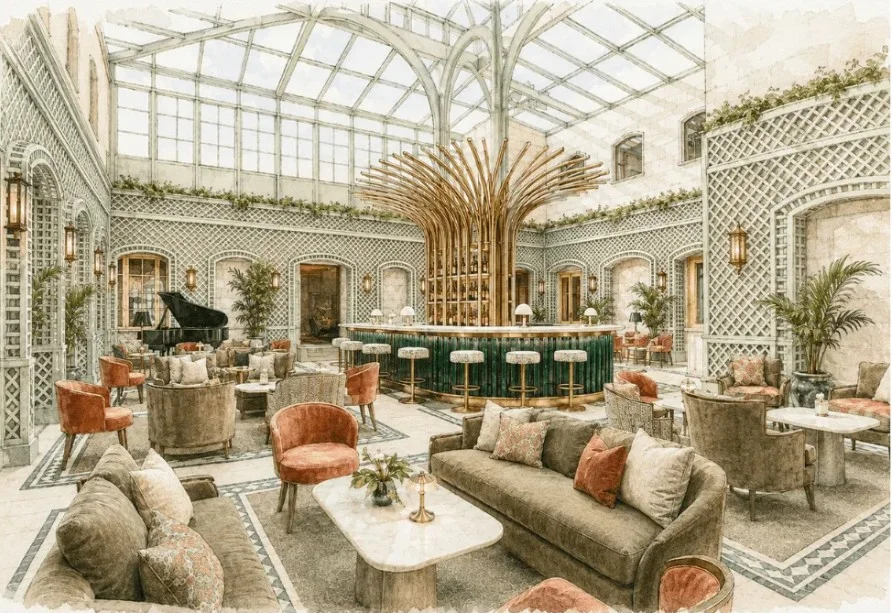
Another major part of the investment is a 3,200-square-foot glass-enclosed Atrium, scheduled to open in July 2027. The new space will transform the castle’s historic courtyard into a central gathering area. During the day, it will operate as a relaxed social space, before shifting toward cocktails, live music and evening gatherings. The addition is significant for a heritage hotel where organisers must balance the visual character of an historic property with the practical need for flexible guest spaces.
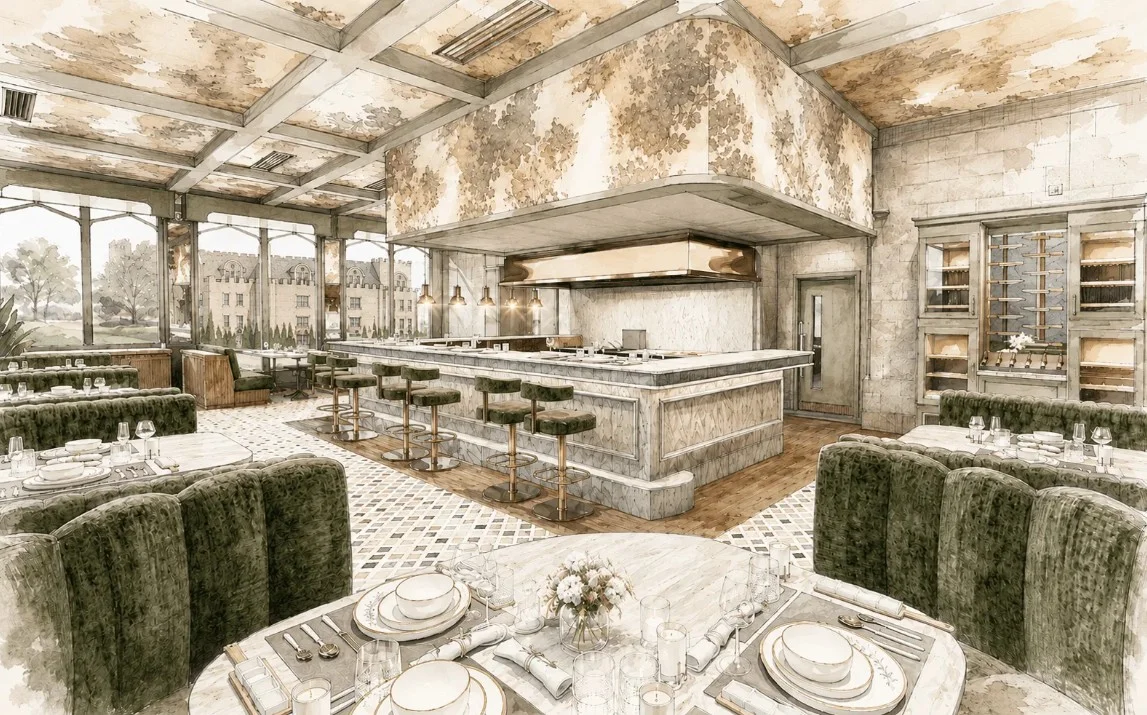
The redevelopment will also bring new dining concepts. A new Grill restaurant will feature an open kitchen and live-fire cooking, while the Earl of Thomond restaurant is being redesigned around a more theatrical fine-dining experience. The estate is also bringing one of its historic walled gardens back into use through the Dromoland Farm concept, which will grow produce for the property’s kitchens. These additions give event planners more options beyond the main ballroom, particularly for welcome gatherings, private dinners and the different stages of a multi-day celebration.
The Estate Experience Is Expanding Beyond the Castle
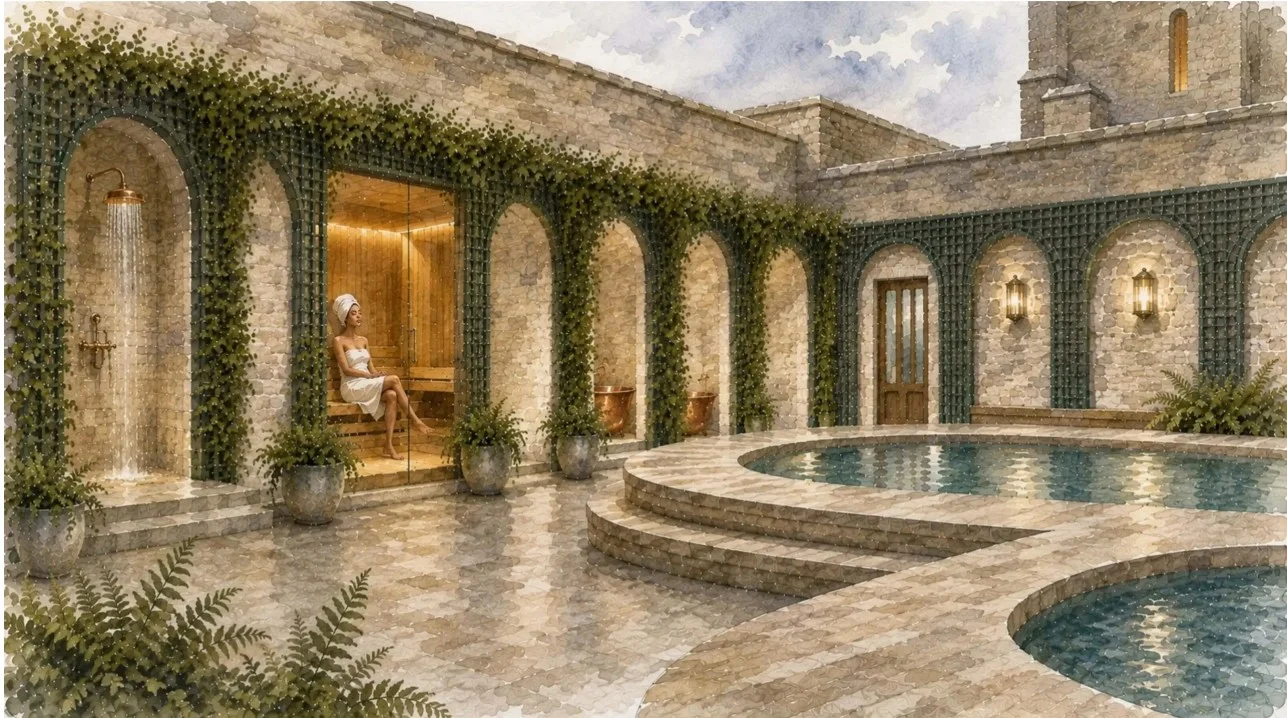
Dromoland’s wider transformation also includes an expansion of the Castle Spa and new wellness experiences across the estate. Two glass-fronted saunas will be introduced beside Lough Dromoland, while the resort is expanding cultural activities including Irish language lessons, embroidery workshops, art classes and countryside experiences.
These elements sit alongside existing activities such as falconry, archery, boating, whisky tastings and golf. For destination weddings and incentive groups, that wider programme can be as important as the main event space. Multi-day programmes increasingly require hotels to provide experiences for guests before and after the central celebration or meeting.
Resort General Manager Mark McSorley said the investment is designed to bring the castle and the wider estate closer together rather than change the identity of the property.
“The ambition is not to change the essence of Dromoland, but to reveal the full breadth of what it can be,” McSorley said.
Heritage Hotels Are Expanding the Event Product
Dromoland’s investment reflects a wider shift in the luxury hospitality market. Historic hotels can no longer rely only on architecture, heritage or a traditional ballroom when competing for international weddings and high-value group business. Accommodation capacity, flexible gathering areas, dining, wellness and activities across the destination increasingly form part of the same event product.
The Dromoland project addresses several of those elements at once. More rooms increase the number of guests who can stay within the estate, while the renovated ballroom and new meeting rooms strengthen its formal event infrastructure. The Atrium, restaurants and expanded estate experiences add spaces that can support the programme around the main event. For a 16th-century property, the transformation is therefore less about replacing its historic identity than building a larger hospitality and event operation around it.
When the redevelopment is complete, Dromoland Castle will return with more accommodation, more meeting capacity and a wider range of spaces for celebrations, positioning the estate for a larger share of the luxury group and destination wedding market.