

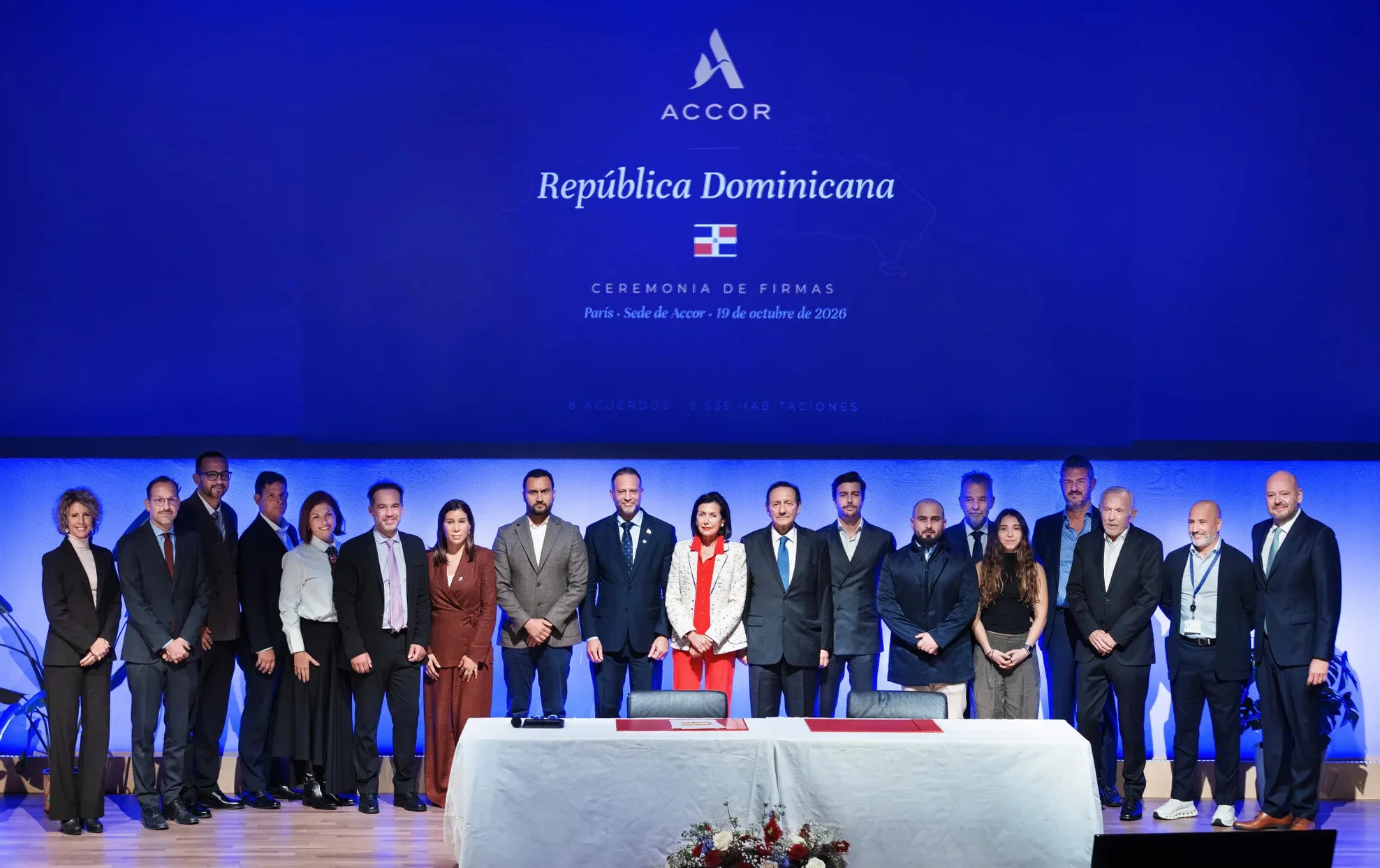
The Dominican Republic’s hotel expansion is moving beyond the traditional Caribbean resort model. Accor has built a development pipeline of 23 hotel projects representing nearly 6,000 rooms across the country, combining coastal resorts with city hotels, airport accommodation, branded residences and large-scale event infrastructure. The pipeline, which includes signed agreements and memoranda of understanding, represents approximately 6.5 percent of the Dominican Republic’s existing national hotel capacity. More than 1,000 branded residences are also planned, while Accor estimates that the projects could generate up to 9,000 direct jobs.
The scale is significant, but the distribution of the projects is equally important. Rather than concentrating exclusively on established leisure markets such as Punta Cana, the group is expanding into Miches, Cabo Engaño, Samaná Bay, Cabrera, Juan Dolio, Santo Domingo and airport locations. That strategy reflects a broader shift in the country’s hospitality market. The Dominican Republic welcomed 11.6 million visitors in 2025, while continued infrastructure investment and international demand are creating opportunities beyond all-inclusive beach resorts. Accor’s pipeline is therefore being structured around several different travel segments at the same time: leisure, business travel, meetings and events, airport stays, long-stay demand and residential hospitality.
Juan Dolio Adds a 4,000-Seat Convention Centre
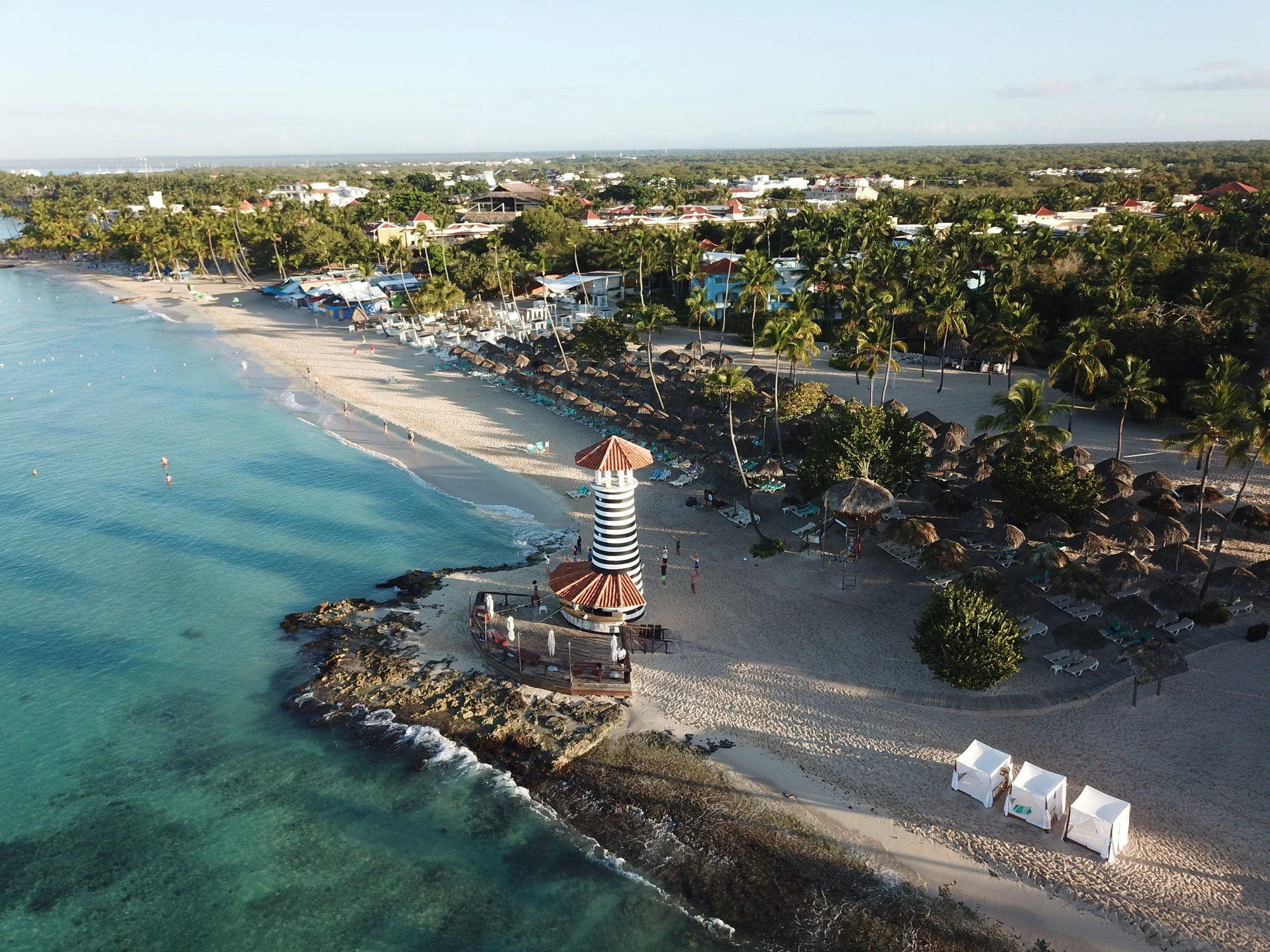
One of the most significant projects for the events sector is planned in Juan Dolio, east of Santo Domingo and close to Las Américas International Airport. Pullman Juan Dolio will include 400 hotel rooms and rise above a convention centre designed to accommodate 4,000 people. The development is intended to bring larger international congresses and events to the Dominican coast, combining meeting capacity with accommodation in the same complex. The project introduces another dimension to the country’s hospitality expansion.
The Dominican Republic has traditionally built its international tourism strength around beach destinations and resort inventory. Adding dedicated convention infrastructure creates an opportunity to use that hotel capacity for business events, association meetings and incentive groups as well. For international organisers, proximity to an airport and the ability to combine conference facilities, accommodation and leisure experiences within the same destination can reduce the operational complexity of moving large groups. Juan Dolio could therefore position itself between the capital’s business infrastructure and the country’s established resort offer, creating a different proposition from both Santo Domingo and Punta Cana.
New Hotel Development Moves Beyond Punta Cana
Accor’s plans also indicate a geographical diversification of the Dominican hotel market. Around 60 percent of the country’s hotel rooms are currently concentrated in La Altagracia province, home to Punta Cana and Bávaro. Several of the new projects are designed to extend international hotel development into other parts of the country.
Miches will become one of the largest clusters in the pipeline. A 207-hectare multi-brand development is planned to include a 250-room Swissôtel focused on wellness, Grand Mercure and Novotel resorts with 1,000 rooms each, an ibis property and a proposed Fairmont with 250 rooms and 100 branded residences. At Cabo Engaño, another nature and wellness-focused development is expected to bring together Mövenpick, TRIBE and Swissôtel. The planned properties would add approximately 1,300 hotel rooms alongside 450 branded residences.
Further north, a 350-room Handwritten Collection resort in Miches is set to anchor a 36-hectare master plan that also includes 400 branded residences, while a 95-room Handwritten Collection property is planned for the cliffs of Cabrera. The range of brands and locations shows how hotel development is increasingly being used to create new tourism nodes rather than simply adding inventory to established destinations.

Airport Hotels Enter the Growth Strategy
Airport accommodation is another part of the pipeline. An ibis property is planned near Punta Cana International Airport, while an ibis budget hotel at Santo Domingo Airport is expected to open in 2028. Accor is also developing broader ibis and ibis budget networks that could extend into Santo Domingo, Santiago, Puerto Plata, Las Terrenas and Higüey.
Airport hotels can play a different role from resort accommodation, particularly as international air traffic grows and the country attracts more business travellers, flight crews, short-stay visitors and event groups. For the MICE sector, they can also support large movements of delegates arriving or departing on different schedules, particularly when events are held outside the main city centre. The combination of airport properties, urban hotels and convention infrastructure suggests that the country’s future accommodation strategy will increasingly need to serve travellers whose primary purpose is not a traditional beach holiday.
Branded Residences Become Part of Hotel Expansion
More than 1,000 branded residences are included across Accor’s Dominican Republic pipeline. The model is being introduced alongside Fairmont, TRIBE, Swissôtel and Handwritten Collection developments, while Swissôtel Santo Domingo is expected to combine approximately 75 hotel rooms with 180 branded residences. This reflects the growing convergence between hotels, long-stay accommodation and residential real estate.
For hotel groups, branded residences can extend a project beyond traditional room revenue while supporting restaurants, wellness facilities and other hospitality services throughout the year. For destinations, they can also create a more permanent international customer base alongside short-term visitors. The Dominican Republic pipeline therefore represents more than a hotel room expansion.
Resorts remain a major part of the strategy, but convention capacity, airport hotels, city properties and branded residences are increasingly being developed alongside them. If the planned projects move forward, the country’s next phase of hospitality growth could be defined less by adding another beach resort and more by creating an accommodation network capable of serving multiple types of travel within the same destination economy.