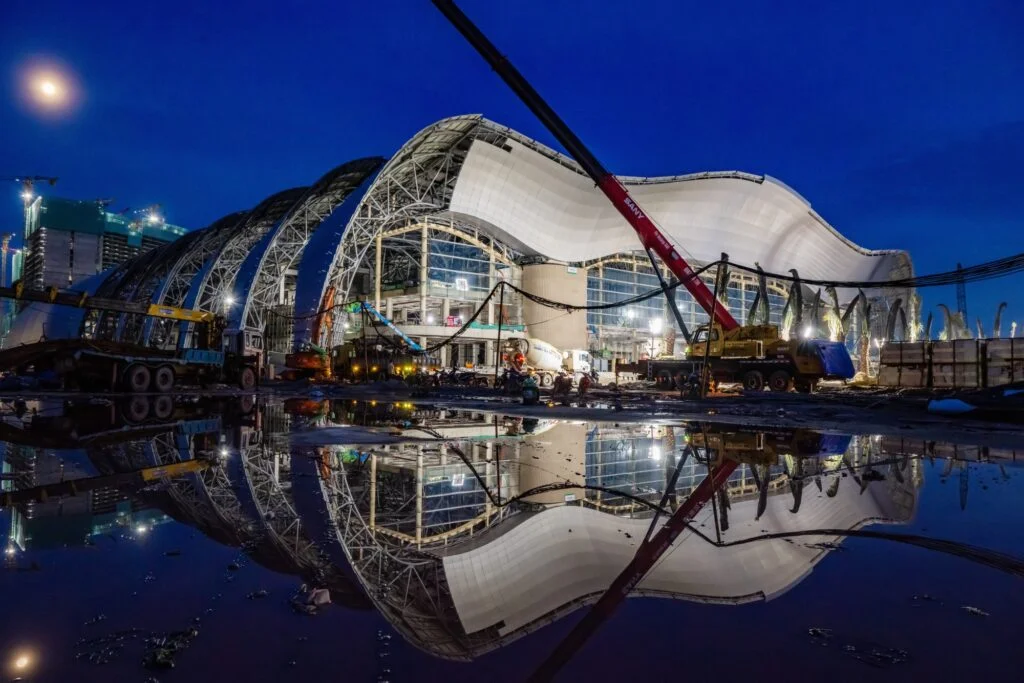
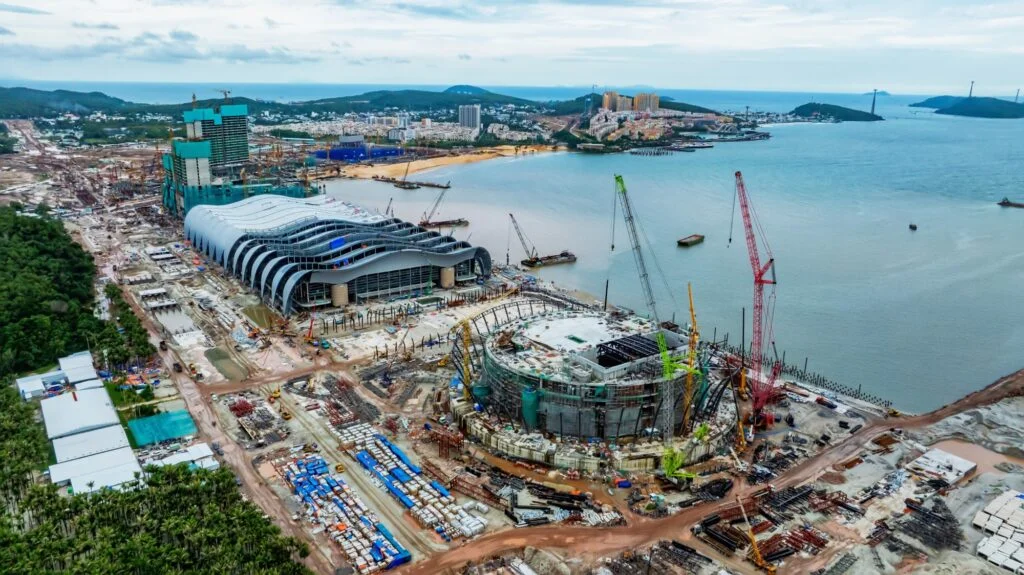
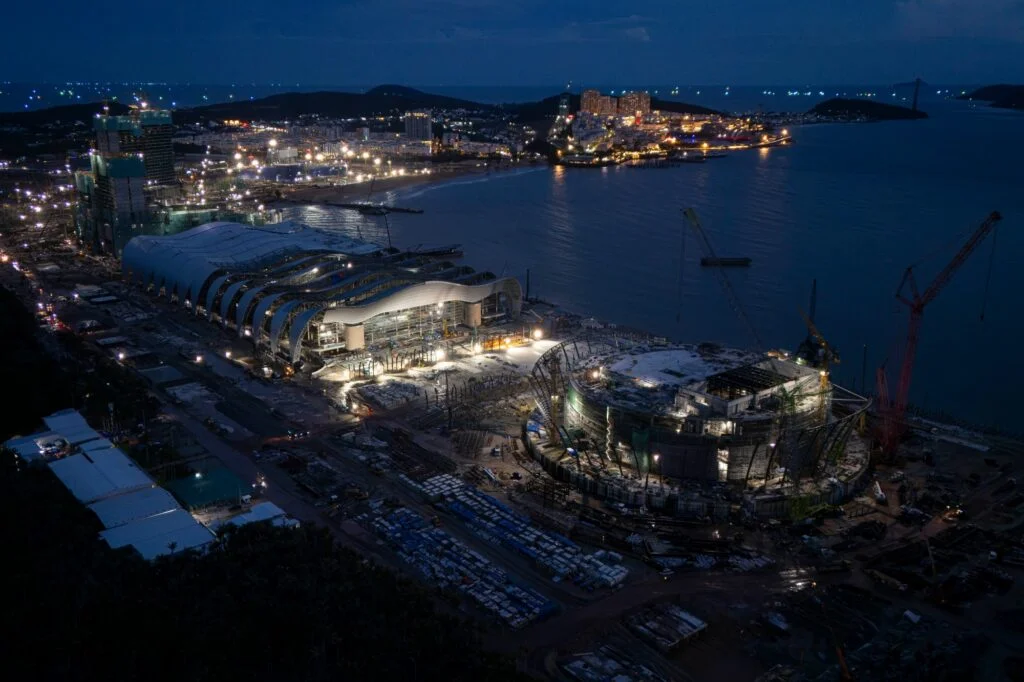
The APEC Economic Leaders’ Week, which Vietnam will host in 2027, is becoming more than preparation for a single major event in Phu Quoc. It is developing into a comprehensive investment programme reshaping the destination’s long-term MICE infrastructure. Across the island, 21 major projects covering transportation, congress and exhibition infrastructure, accommodation, energy, water and urban services are being developed simultaneously. The total investment value of the projects has reached approximately USD 5.4 billion. At the centre of the programme are the new APEC Convention and Exhibition Centre and the expansion of Phu Quoc International Airport. The convention complex, representing an investment of around USD 860 million, is being developed as a multipurpose venue capable of hosting high-level meetings, exhibitions, banquets, cultural programmes and international events. Much of the main structural work has been completed, while façade and interior works are expected to be finished ahead of the 2027 summit.
The airport investment, valued at approximately USD 870 million, includes a new passenger terminal, VIP terminal, second runway, taxiways and expanded aircraft parking areas. Once the expansion is completed, the airport is expected to reach an annual capacity of around 20 million passengers and accommodate wide-body aircraft including Boeing 747s and 787s, as well as Airbus A350s. Using this capacity for international congresses, corporate events and incentive travel after APEC will form a key part of Phu Quoc’s investment strategy.
Convention Centre, Airport and Hotels Are Being Developed as One System
Phu Quoc’s transformation is not based solely on the construction of a large convention centre. As part of preparations for APEC, a broader destination system is being developed in which the airport, event venues, hotels and transportation infrastructure can operate in an integrated way. A new accommodation district being developed in the Bai Dat Do area in the south of the island will form one of the largest components of this system. Around 17 high-rise hotel buildings and approximately 7,000 five-star rooms are planned across an area of about 88 hectares. The new district is expected to include 13 brands from different international hotel groups.
This capacity will significantly expand Phu Quoc’s existing luxury accommodation inventory. The hotels are planned close to the conference area so they can serve not only APEC delegations but also major international congresses, corporate groups and incentive travel programmes. The accommodation cluster being developed along the APEC route will allow transportation, security and operations to be managed more centrally rather than dispersing hundreds or thousands of participants across different parts of the island.
New Transport Network from the Airport to the Convention District
One of the key components of Phu Quoc’s changing MICE infrastructure will be its transportation system. Around USD 98 million is being invested in the approximately 20-kilometre DT.975 road connecting the airport with the congress and hotel districts in the south of the island. APEC Boulevard, which will provide access to the convention complex, is planned to be around 3 kilometres long and 68 metres wide. The road will connect the event district with surrounding tourism and urban development projects.
In addition, a new urban rail system stretching more than 20 kilometres is planned between the airport and the APEC district. The line, expected to be developed with an investment of approximately USD 355 million, will include elevated, ground-level and underground sections. The transport investments are intended to do more than manage delegation traffic during APEC. The new connections are designed to reduce travel times between the convention centre, airport and accommodation districts, increasing Phu Quoc’s accessibility for international event organisers.
A MICE Strategy for the Post-APEC Period
Phu Quoc’s real test is expected to begin after APEC 2027. One of the main risks facing mega-event investments is the possibility that infrastructure developed for major international events may fail to generate sufficient event volume once the event itself is over. Vietnam’s plan for Phu Quoc therefore approaches the convention centre not as a standalone facility, but as part of a wider system incorporating the airport, accommodation, public transport, entertainment and urban infrastructure. The aim is to redirect the capacity created for APEC toward international congresses, corporate meetings, incentive travel and large-scale events in the years that follow.
The island’s existing leisure infrastructure will also form an important part of this strategy. The ability to organise gala dinners, team activities, entertainment programmes and extended stays within the same destination after congress programmes could allow Phu Quoc to compete not only on meeting capacity, but also on post-event experiences. While APEC 2027 creates a clear delivery deadline for Phu Quoc, the investments being made will reshape the island’s event capacity for much longer. Once the convention centre, expanded airport, thousands of new hotel rooms and new transport network are fully operational, Phu Quoc’s main challenge will be turning infrastructure built around a single summit into sustainable international MICE traffic.